
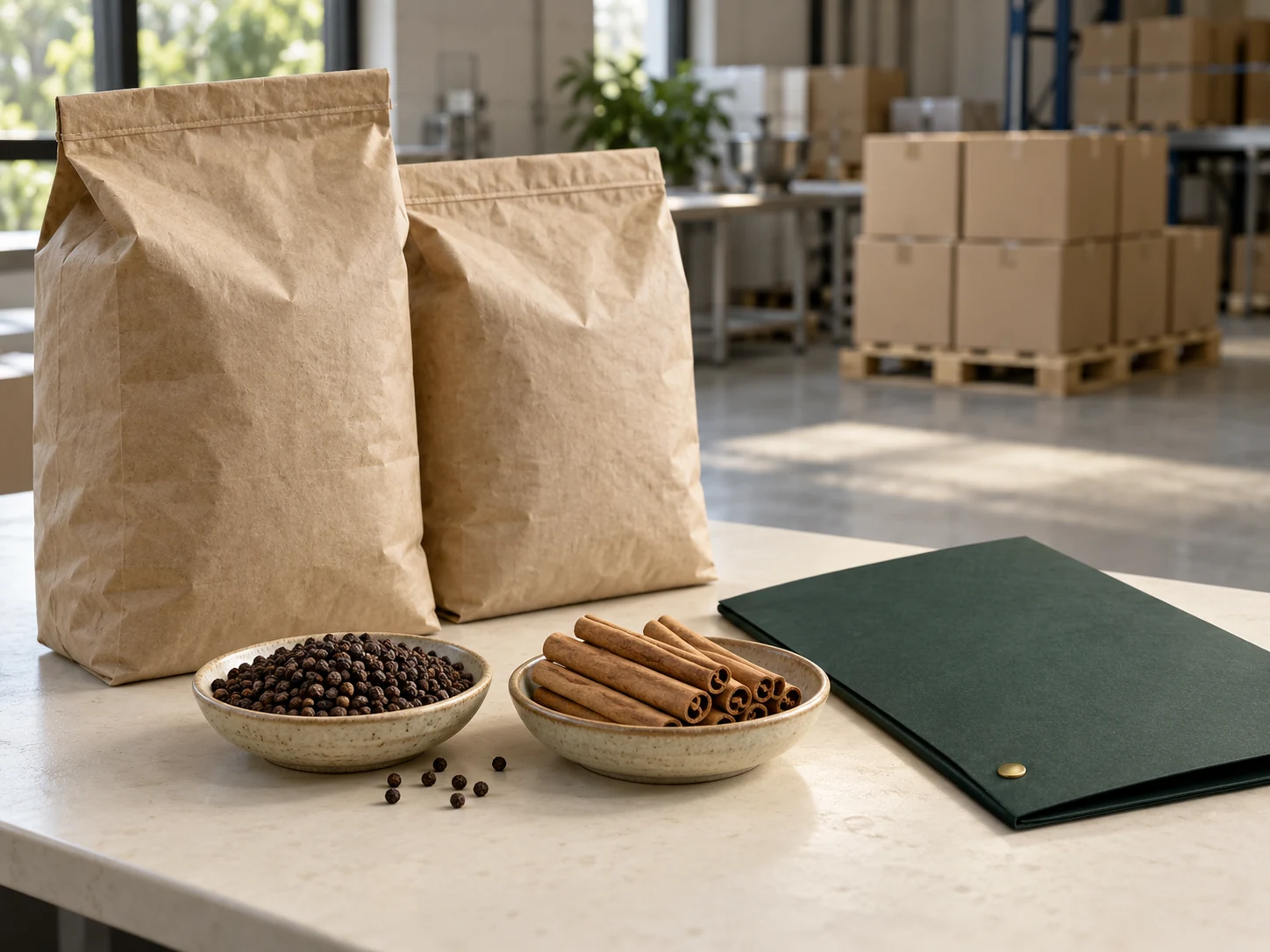
A spice shipment can pass through producers, packers, warehouses and distributors before reaching its final buyer. For importers serving Asia and MENA, the commercial challenge is to preserve the connection between the physical goods and their records—even when consignments are split, repacked or transferred between businesses.
Practical trade guidance. Sources checked: 16 October 2026.
Traceability starts with the physical lot
A purchase order identifies a commercial transaction. A lot reference identifies a defined group of goods. Buyers need both, together with a reliable connection between them.
Codex’s traceability principles describe following food through specified stages of production, processing and distribution. They also establish the principle of identifying the previous supplier and subsequent recipient at the relevant stage. Traceability supports associated controls; it does not establish food safety by itself.
For spice buyers, the practical question is straightforward: can the business connect a particular bag, carton or retail pack to the records supporting its supply?
An invoice describing “black pepper” is insufficient for that purpose if it cannot be connected to the producer’s lot, the packing record and the consignment received.
Record what happens between businesses
Traceability depends on recording movements and handling activities, alongside product identity.
GS1’s Global Traceability Standard distinguishes between Critical Tracking Events, such as receiving, packing and shipping, and Key Data Elements, which describe those events. This provides a useful framework for deciding which information trading partners need to exchange.
As a practical procurement recommendation, agree a common record structure covering:
- Product description and agreed specification.
- Supplier and lot references.
- Quantity and unit of measurement.
- Dispatch and receiving locations.
- Relevant dates and transport-document references.
- Any subsequent packing or transformation references.
Assign responsibility for recording each handover. A warehouse receipt should connect incoming goods to their supplier records, while dispatch records should identify the quantities and lots sent onward.
Preserve the connection during repacking
Repacking deserves particular attention because the original external packaging may disappear.
If bulk cinnamon is divided into smaller packs, the new packing references should remain connected to the incoming lot. The same principle applies when a distributor breaks a pallet into smaller deliveries.
Where different incoming lots are combined, retain the relationship between all contributing lots and the resulting output. A new internal code should support that relationship rather than conceal it.
Businesses should also reconcile quantities. The records should explain how incoming stock becomes dispatched goods, remaining inventory and any documented losses.
This discipline can make later enquiries more focused. Without it, an organisation may struggle to determine which customers received goods from a particular lot.
Separate origin, packing location and destination
International spice programmes can involve several different locations. The growing origin, processing site, packing facility and dispatch country should be recorded distinctly.
For buyers using regional distribution hubs in Asia or MENA, this distinction becomes especially useful when goods are repacked or re-exported. A warehouse address alone does not explain where a spice was grown or processed.
Before shipment, ask the responsible importer to confirm the destination’s applicable documentation, registration and labelling requirements. Agree which business supplies each document and which business checks its suitability.
Supporting specifications, certificates or analytical reports should be clearly associated with the relevant product and, where applicable, the relevant lot. Buyers should understand their scope rather than assume that one document covers every future shipment.
Check whether the records work in practice
A practical traceability exercise can reveal gaps before an urgent enquiry occurs.
Select a received lot and ask the team to identify its supplier, supporting documents, current stock locations and subsequent business recipients. Then work backwards from an outbound delivery to the corresponding incoming goods.
Include a repacked or split consignment where possible. These movements can expose weaknesses that remain hidden when goods travel directly from one supplier to one customer.
Assess whether quantities reconcile and whether staff can retrieve the information without relying on one individual’s memory or private messages.
These are operational recommendations for the businesses handling the goods.
Build the information flow into the supply relationship
Traceability is easier to maintain when responsibilities are agreed before orders begin.
Include document references, lot identification and handover records in discussions with producers, packers, logistics providers and distributors. Agree how corrections will be communicated and who should receive a product-related enquiry.
The aim is usable information throughout the relationship. A digital platform can help organise records, but its usefulness depends on the accuracy and completeness of the information entered.
For buyers comparing suppliers, the ability to explain a lot’s journey provides valuable commercial context alongside price, specification and packaging.
Discuss your spice programme with Green Nordic
Green Nordic’s Amma Estate spice programme includes Sri Lankan cinnamon, black pepper and other selected spices for professional buyers. Its published process covers qualification of origin, producer, packer and documentation, with specifications and commercial terms confirmed for each enquiry.
Contact Green Nordic with your required spice, whole or ground format, estimated volume, packaging and destination. Include any lot-documentation requirements so they can form part of the supplier discussion.
Discuss your spice sourcing brief →