
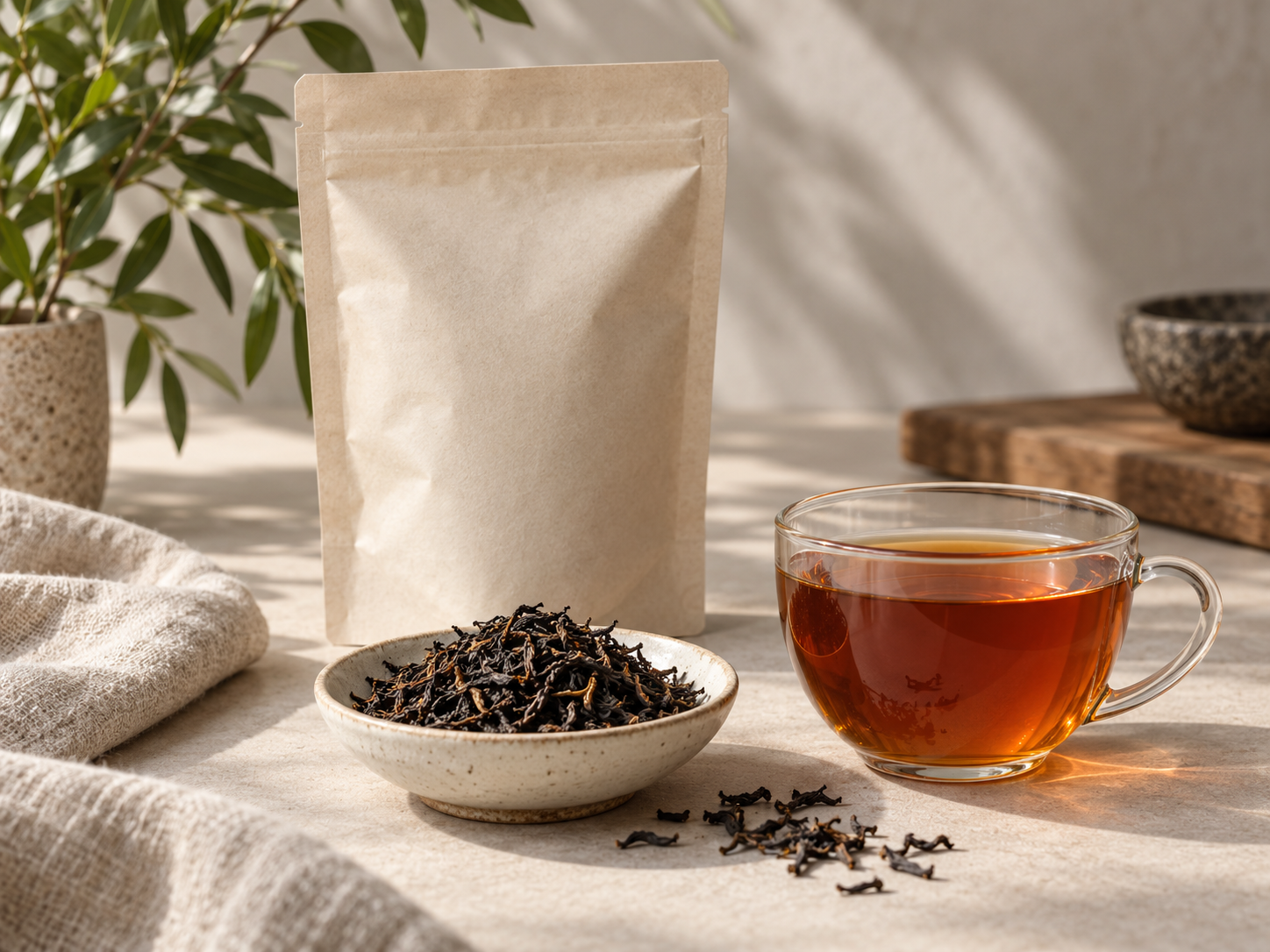
A useful tea quotation starts with a clear commercial brief. For importers, distributors and brand owners entering Asian and MENA markets, defining the product, packaging and delivery requirements early makes supplier proposals easier to compare.
“Please quote private label tea” leaves several important questions unanswered. Two suppliers can respond with different tea profiles, pack sizes, printing assumptions and delivery terms. Their prices may look comparable while describing substantially different products.
A request for quotation, or RFQ, should give suppliers enough information to evaluate the opportunity and explain their assumptions. The following framework is practical purchasing guidance, rather than a report of new market developments.
Start with one destination and one sales channel
Identify the first country where the product will be sold and the intended channel: supermarkets, specialist retail, online sales, hospitality or wholesale distribution.
A request covering “Asia and the Middle East” is too broad for a final packaging brief. Begin with a defined launch market and list possible expansion markets separately. This helps organise discussions about language, pack presentation, importer information and documentation. Green Nordic’s Market Access service provides a starting point for a qualified discussion.
Explain the intended positioning as well. An everyday retail tea, a hospitality service product and a premium gift collection require different commercial decisions. Include your target price segment without presenting an untested retail price as established demand.
Describe the tea before designing the packaging
Specify whether you require black tea, green tea or another clearly defined tea product. State your preferred origin, flavour profile, brewing method and serving format.
For loose tea, describe the desired leaf appearance and cup characteristics. For tea bags, identify the preferred bag format, quantity per retail pack and whether individual envelopes are required. If these choices remain open, ask suppliers to quote clearly labelled alternatives.
Use samples to turn subjective preferences into an agreed reference. Record which sample was selected, how it was prepared and which characteristics matter most. Packaging artwork should develop alongside a product specification that both parties understand.
Define every level of the pack
A retail unit is only one part of the packaging system. Your RFQ should also describe the inner pack, shipping carton and any pallet requirements.
Include net weight, units per carton, preferred materials, barcode responsibility and the current status of artwork. Ask suppliers to distinguish existing packaging options from custom formats requiring additional development.
Request separate information on minimum order quantities for tea, printed packaging and individual variants. Ask how unused packaging would be handled if the first order does not consume the full printing quantity. These questions help expose commitments that a single unit price may overlook.
Check origin marks before approving artwork
Origin language and certification marks deserve a separate review.
The Sri Lanka Tea Board states that its Lion Logo identifies 100% pure Ceylon tea packed in Sri Lanka. Use of the mark follows an application and evaluation process; it should not be treated as a graphic that any private label project can automatically add.
If you want the Lion Logo on your packaging, ask the proposed supplier to confirm eligibility and provide the relevant approval evidence for the proposed pack. Keep this decision separate from choosing a Sri Lankan tea sample.
The practical purchasing principle is straightforward: agree the evidence behind packaging claims before committing to printed materials.
Separate the opening order from the forecast
State the proposed first-order quantity and the expected reorder pattern separately. A forecast gives suppliers planning context, but it should be clearly identified as an estimate.
Show quantities by product and packaging variant. Ask which volumes affect pricing, whether mixed-product shipments are possible and how replenishment would be organised.
Request lead-time assumptions for sample approval, artwork approval, packaging procurement and production. Also ask what must happen before the quoted production period begins. A launch date becomes more useful when it is supported by identifiable milestones.
Compare quotations on the same delivery basis
Ask each supplier to identify the currency, quotation validity, Incoterms® rule, named place or port, and applicable edition.
For container shipments, discuss the actual transport and handover arrangements before selecting a rule. ICC’s checklist identifies FCA as an option for containerised or multimodal movements where the seller does not arrange the main transport. The final choice depends on the transaction and the responsibilities agreed between buyer and seller.
Request clear treatment of freight, insurance, terminal charges and destination costs. Compare payment terms separately. The objective is to understand what each offer includes and where additional costs or responsibilities begin.
Turn the brief into a qualified sourcing discussion
A strong RFQ brings together the destination, sales channel, tea specification, packaging, opening volume, forecast, documentation needs and delivery basis.
Green Nordic’s Global Sourcing process covers requirement definition, supplier qualification, samples and commercial coordination. Its food and ingredients portfolio includes tea sourcing to brief, with specifications, availability, MOQ and lead times confirmed for each enquiry.
Planning a private label tea project?
Send Green Nordic your RFQ, including the destination country, preferred tea, pack format and estimated opening quantity. We can assess the requirement and identify the next steps towards a qualified quotation.
Sources checked 6 October 2026. This article offers purchasing guidance; product availability and commercial terms are confirmed for each enquiry. Hero image: illustrative packaging concept.