
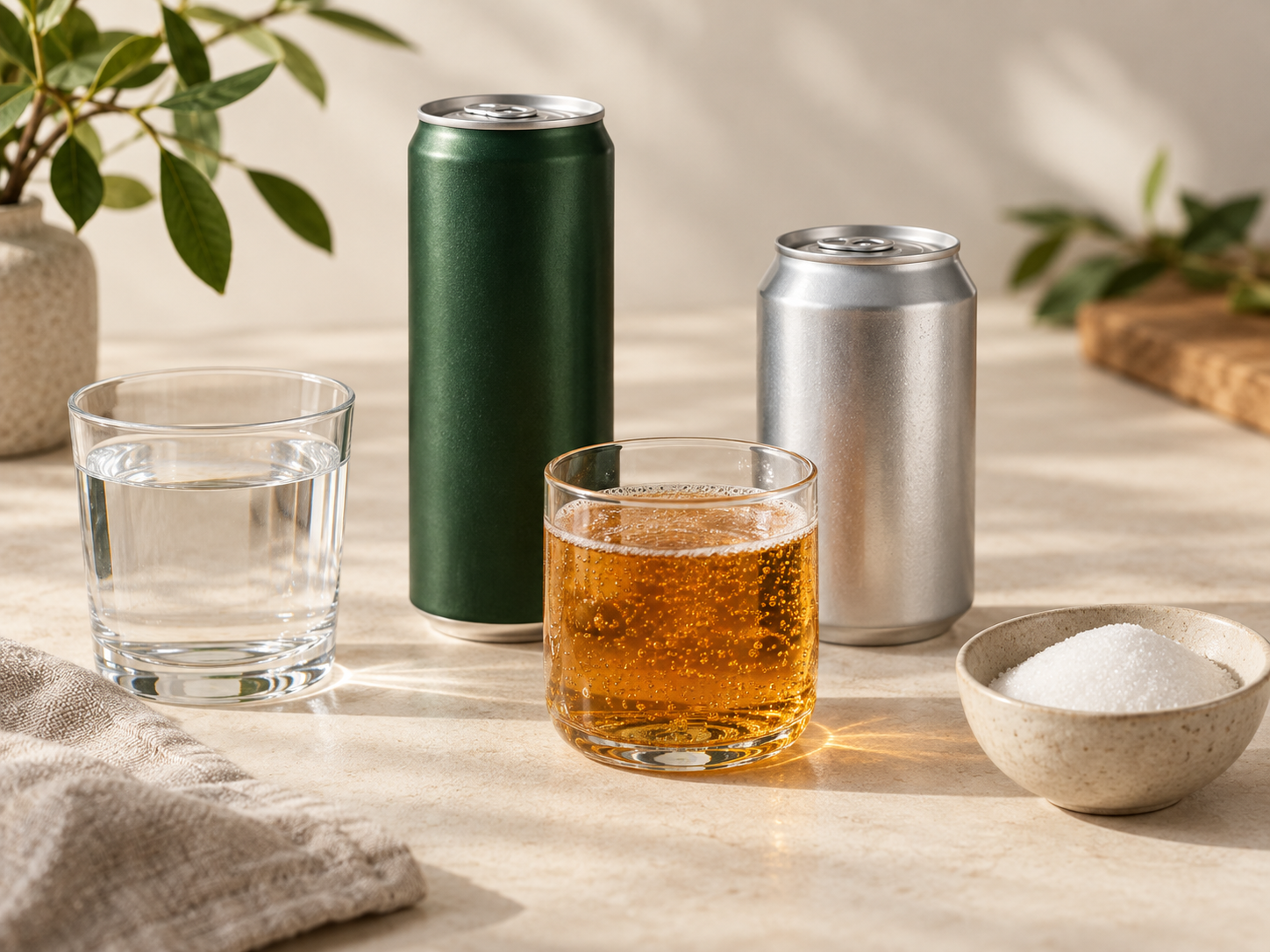
Sustainability in the beverage sector includes public health. WHO’s recommendations on free sugars, health taxes and marketing to children give brands and distributors important context for product development—while energy drinks require additional attention to caffeine.
Sources checked: 14 October 2026.
Connecting beverage choices to sustainable development
The Sustainable Development Goals belong to the United Nations’ 2030 Agenda. WHO supports their health objectives through evidence-based guidance and cooperation with governments.
The clearest connection is SDG 3: Good Health and Well-being. Its target 3.4 calls for a one-third reduction in premature mortality from noncommunicable diseases by 2030 through prevention and treatment. WHO’s work on healthier diets and reduced sugar consumption contributes to this wider public-health agenda.
For beverage businesses, this provides a reason to examine nutritional composition alongside packaging and environmental performance. A recyclable container does not establish that its contents support a healthy diet. Each aspect needs its own evidence.
What WHO recommends about sugar
WHO recommends that adults and children keep free sugars below 10% of total energy intake. It also suggests reducing intake further, to below 5%, for additional benefits.
Free sugars include sugars added during manufacturing or preparation, as well as those naturally present in honey, syrups, fruit juices and juice concentrates. Consequently, a drink labelled “no added sugar” may still contain free sugars.
These recommendations concern the overall diet. They are not a universal legal sugar limit for an individual beverage.
For product teams, the practical response is to document sugar content clearly, consider the amount consumed from a complete container and evaluate how the product fits its intended sales channel. Marketing language should reflect the actual formulation.
WHO’s “3 by 35” initiative
WHO’s 3 by 35 Initiative seeks to increase the inflation-adjusted prices of tobacco, alcohol and sugary drinks by at least 50% by 2035, through taxation adapted to national circumstances. WHO presents health taxes as a way to reduce harmful consumption and strengthen domestic financing for health and development.
This is a WHO policy initiative with a 2035 horizon, distinct from the UN’s 2030 SDG timetable. It does not automatically impose the same tax in every country.
On 13 January 2026, WHO reported that at least 116 countries taxed sugary drinks, while identifying weaknesses in tax coverage and design. Its findings underline the need for exporters to assess destination policies rather than assume a single international approach.
For trade into Asia and MENA, local classification and taxation should therefore be checked before pricing and distribution commitments are finalised.
Energy drinks need a separate assessment
Sugar-containing energy drinks are relevant to WHO’s work on sugar-sweetened beverages. However, reducing sugar does not resolve every issue associated with the category: caffeine requires a separate assessment.
A 2019 Norwegian VKM risk assessment, commissioned by the Norwegian Food Safety Authority, found that large amounts of caffeinated energy drinks consumed by children and adolescents—particularly over a short period—could cause sleep problems, anxiety and cardiovascular effects. This is Norwegian scientific evidence, distinct from WHO’s dietary recommendations.
As a commercial recommendation, assess caffeine concentration, container size, intended consumers, required warnings and the destination’s sales restrictions together. A “sugar-free” description should not be used to imply suitability for children or unrestricted consumption.
Responsible marketing matters
WHO’s 2023 guideline on food marketing recommends stronger policies to protect children from marketing that encourages consumption of products high in free sugars and other nutrients of concern.
Beverage businesses should therefore review audience targeting alongside formulation. Packaging, digital campaigns, sponsorships and retail placement all deserve consideration.
Health-related sustainability communication should also remain specific. Describing a measurable reduction in sugar is more informative than presenting a product as broadly “healthy” or “SDG-approved”.
Build measurable improvements into the brief
The following are practical business recommendations:
- Establish a baseline. Record sugar per 100 ml and per container, caffeine content and pack size.
- Define the intended market. Identify the destination, sales channel and target consumers.
- Review alternatives. Consider less-sweet formulations and unsweetened options where technically and commercially appropriate.
- Check the complete formulation. Assess ingredients, sweeteners, caffeine and proposed claims together.
- Track the result. Compare approved specifications before and after changes, and retain supporting documentation.
WHO’s healthy-diet guidance advises reducing free-sugar consumption without relying on non-sugar sweeteners. Replacing sugar with another sweetener should therefore not be presented as automatic alignment with WHO recommendations.
There is also a broader connection to SDG 12.6, which encourages companies to adopt sustainable practices and integrate sustainability information into reporting. Recording measurable product changes is one practical business application of that principle; it does not establish WHO endorsement.
Explore water and hydration options
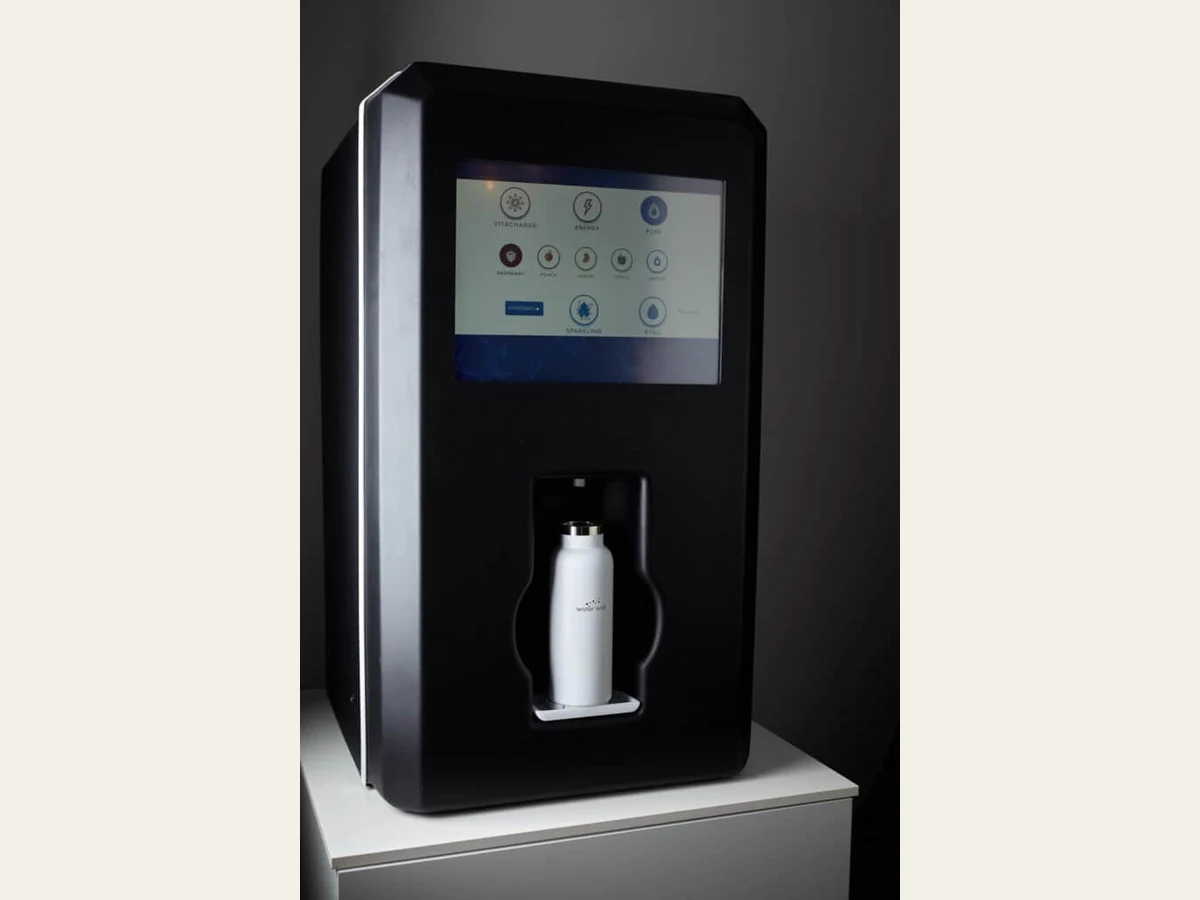
Buyers reviewing their beverage offering can explore Waterwell, a professional hydration concept for workplaces, fitness centres and shared environments, and PURENorway Water, presented for retail, hospitality and international distribution.
Waterwell configurations depend on the location, capacity, water supply and servicing requirements. PURENorway Water formats, packaging and commercial terms are confirmed for the intended market. Ingredients and nutritional information for any flavoured or functional options require separate confirmation.
Green Nordic’s wider beverage portfolio also includes functional and flavoured beverage sourcing and private-label programmes based on a defined brief. Available formulations and formats are confirmed for each enquiry.
Contact Green Nordic with your destination, sales channel, expected volume and preferred solution. Include your target nutritional profile, packaging requirements and documentation needs so these can form part of the supplier discussion.
Discuss your beverage and hydration brief →
This article distinguishes documented guidance from practical business recommendations.