
Filtered, cooled water, optional vitamins and a personal reusable bottle: Waterwell brings hydration closer to the user. For workplaces and fitness centres, replacing individually bottled drinks with refills can also create a measurable opportunity to reduce disposable packaging.
From bottled deliveries to everyday refills
A bottle purchased, transported, consumed and discarded creates a repeated packaging requirement. A refill system changes that routine: users keep their bottle and return to a dispenser.
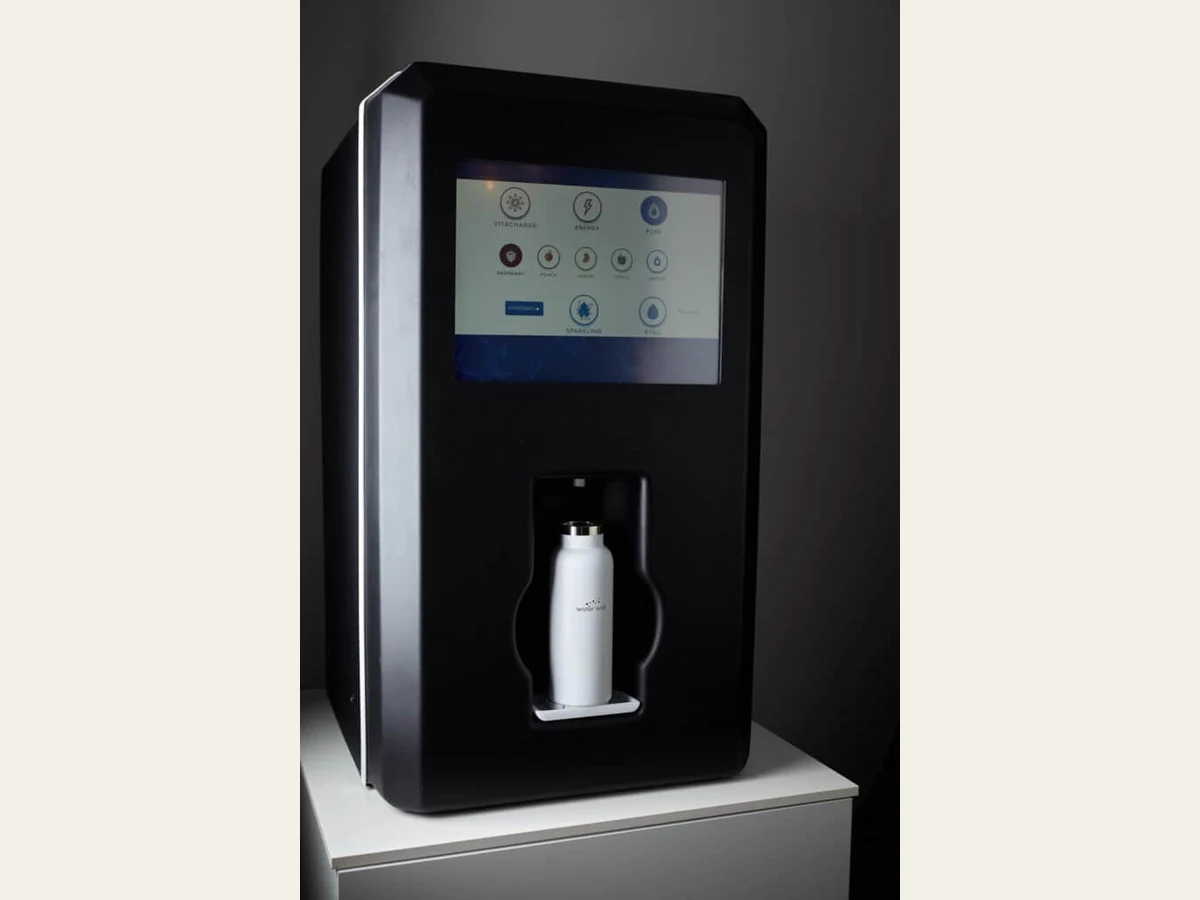
Waterwell’s supplier describes a system connected to the local water supply, dispensing filtered and cooled water. Depending on configuration, users can select flavour, vitamins, carbonation or caffeine additions. Its stainless-steel SmartBottles use NFC technology to support bottle recognition and a personalised experience.
For buyers, the starting point is the location. An office, fitness centre or shared facility needs a configuration suited to its water supply, daily demand and servicing arrangements. Green Nordic connects professional buyers with current supplier information and market-specific quotations through its Waterwell offering.
How many disposable bottles could a workplace avoid?
The environmental opportunity becomes clearer when expressed as bottles replaced.
Consider a workplace where each participating employee replaces one disposable plastic bottle per working day, across 220 working days annually. If each replaced bottle body weighs 20 grams, the calculation is:
| Participating users | Disposable bottles avoided annually | Bottle-body plastic avoided annually |
|---|---|---|
| 50 | 11,000 | 220 kg |
| 100 | 22,000 | 440 kg |
| 250 | 55,000 | 1,100 kg |
For 100 regular users, this scenario represents 22,000 fewer disposable bottles and 440 kilograms of bottle-body plastic annually.
These are illustrative calculations, rather than measured Waterwell results. The 20-gram weight is an assumption, not a specification for all plastic bottles. Caps, labels and secondary packaging are excluded.
Actual results depend on how many packaged drinks refills genuinely replace. Refilling a bottle instead of buying a disposable drink avoids packaging; switching from an existing reusable bottle does not create the same saving.
Less packaging—and a fuller environmental picture
Replacing individually packaged drinks can reduce the demand for bottles, caps and labels, alongside the handling of packaged water deliveries and empty containers.
However, avoided plastic is one measure of progress. A complete environmental assessment must also account for manufacturing the dispenser and reusable bottles, electricity, washing, filters, servicing and any packaging used for drink concentrates.
UNEP’s Life Cycle Initiative examines single-use bottles and alternatives through this broader life-cycle approach. For Waterwell buyers, it provides a useful principle: assess the complete operating model before making carbon or environmental claims.
A practical workplace programme can record its previous bottled-drink purchases, subsequent purchases and refill usage. Measuring actual bottle replacement gives sustainability reporting a stronger foundation than assuming every refill represents a bottle saved.
A reusable bottle needs repeated use
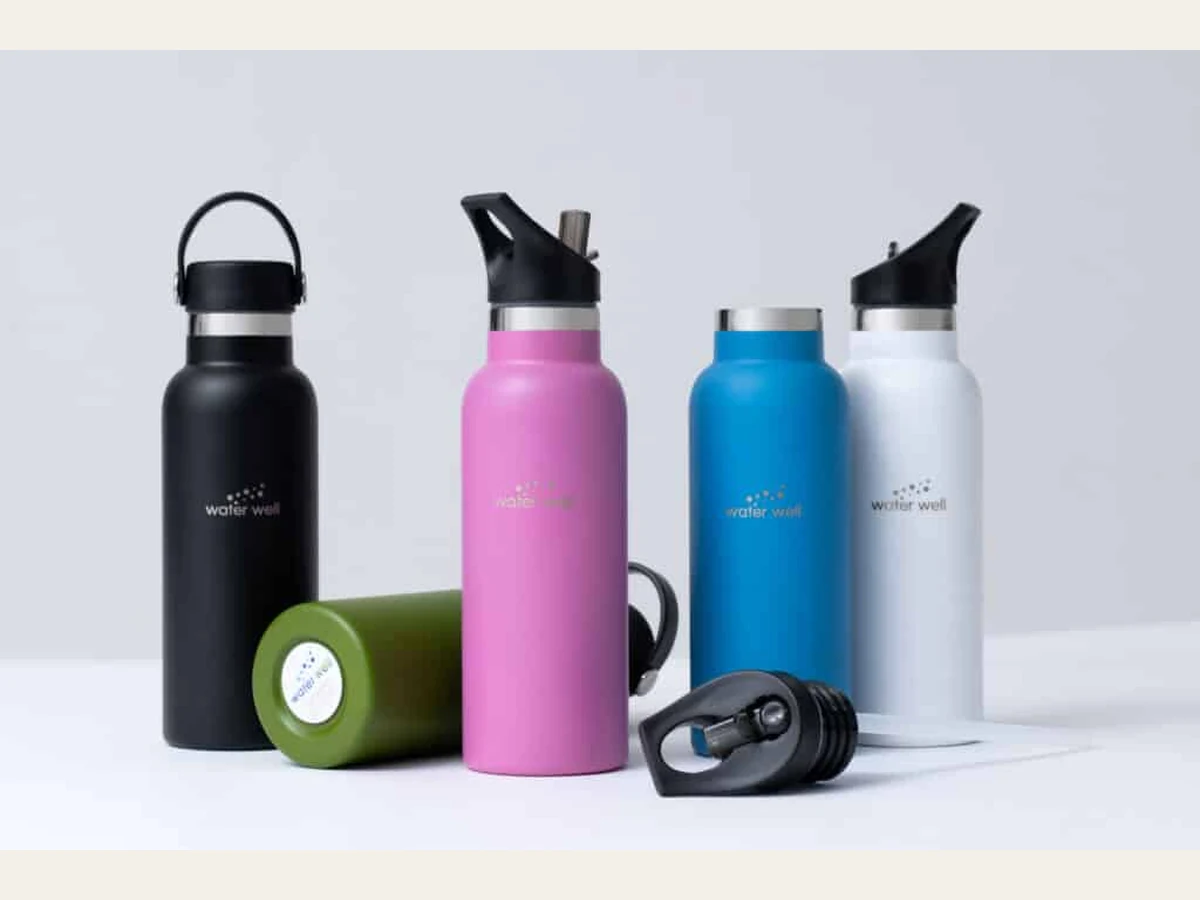
The reusable bottle is central to the refill model. Its value comes from continued use, supported by convenient access to drinking water and suitable cleaning routines.
Organisations should make refilling easy, explain bottle care and encourage users to retain their bottle. Repeatedly replacing reusable bottles undermines the purpose of the programme.
Personalisation may help make the bottle part of an everyday routine. Waterwell describes options for colours, names and company branding; compatibility and available formats should be confirmed for the selected system.
Vitamins and flavour as optional choices
Vitamin and flavour additions offer variety, while plain filtered water remains a straightforward hydration option.
Buyers should request the ingredients, serving quantities and nutritional information for every proposed addition. Sugar, sweeteners, caffeine and permitted nutrition claims require consideration for the intended users and destination market.
Vitamin additions should be presented accurately, without implying that they replace a balanced diet. Available functions and their documentation should be confirmed during the quotation process.
Safe drinking water remains a global priority
Reducing disposable packaging matters, but reliable access to safe water remains the more fundamental need.
WHO and UNICEF reported on 26 August 2025, using estimates for 2024, that 2.1 billion people lacked safely managed drinking water, including 106 million using untreated surface water. Safely managed services require water available when needed, accessible on premises and free from contamination.
The report highlights disparities affecting rural communities, low-income countries, fragile settings, children, and minority ethnic and Indigenous groups. Women and girls also carry much of the water-collection burden in many countries.
This context makes responsible water planning essential. Filtration performance must match the actual source-water conditions: a dispenser should never be assumed to make every unsafe supply drinkable. Where contamination is a concern, source-water assessment and documented treatment capability must come first.
Explore Waterwell with Green Nordic
For organisations considering a refill solution, Green Nordic can help establish the commercial brief and obtain current supplier information.
Start with the country, site type, expected users, water supply, preferred functions and bottle requirements. Include current disposable-bottle consumption to build a realistic packaging-reduction baseline.
Explore Waterwell or contact Green Nordic to discuss a configuration for your location.
Discuss your Waterwell refill solution →
Sources
WHO/UNICEF: Drinking-water update, 26 August 2025
UNEP Life Cycle Initiative: Single-use bottles and alternatives